
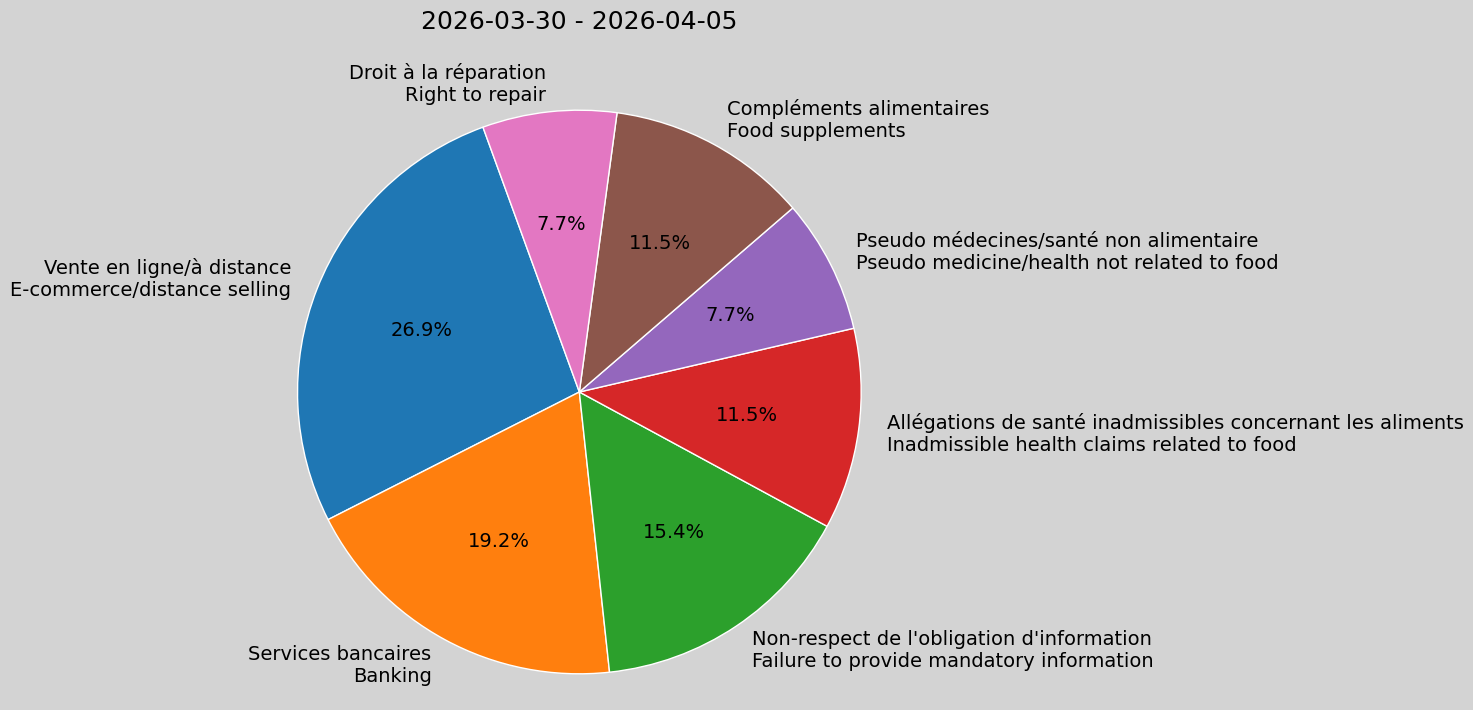
During the week of March 30 to April 5, 2026, the Service Juridique conducted a total of 21 consultations focusing on various consumer protection issues. These consultations were carried out through multiple communication channels, predominantly via e-mail and phone, with occasional use of video calls, messenger, and telegram.
In seven instances, the consultations centered on issues related to e-commerce/distance selling. Consumers frequently inquired about their rights concerning return policies and delivery delays. In these cases, advice was provided on how to assert their rights effectively and seek resolution with the sellers.
The topic of banking was discussed in five consultations. Consumers raised concerns primarily about unclear terms and conditions and unauthorized charges. The guidance offered involved reviewing the terms with the respective banks and identifying any contractual obligations or consumer rights violations.
Another area of concern was failure to provide mandatory information, noted in four cases. This often involved issues with product labeling and insufficient information regarding the terms of services. Consumers were advised to contact the service providers to request the necessary information and understand their options for recourse should compliance remain inadequate.
There were also three consultations regarding (inadmissible) health claims related to food. Consumers sought clarity on how to interpret misleading health benefit statements. They were advised about the regulations in place to prevent deceptive claims and encouraged to scrutinize product information critically.
On two occasions, the topic of pseudo medicine/health not related to food was brought up. The inquiries involved concerns about non-evidence-based health treatments. Consumers received information about identifying credible sources and how to avoid fraudulent practices in the health sector.
Food supplements emerged as a concern in three discussions, with consumers questioning quality and composition. We explained the importance of checking regulatory approvals and advised practical steps for verifying product authenticity and safety.
The lesser raised topic was the right to repair, which featured in two consultations. Consumers were made aware of their entitlements related to the repairability of electronics and appliances and were encouraged to demand repair services as per their rights within the EU directives.
In one rare instance, the counseling was deemed outside our scope, as the issue related to cross-border taxation, which is not within our purview as a consumer watchdog. Advice was provided to seek guidance from appropriate tax advisory services.
This week counseling was provided by WhizzBang.