
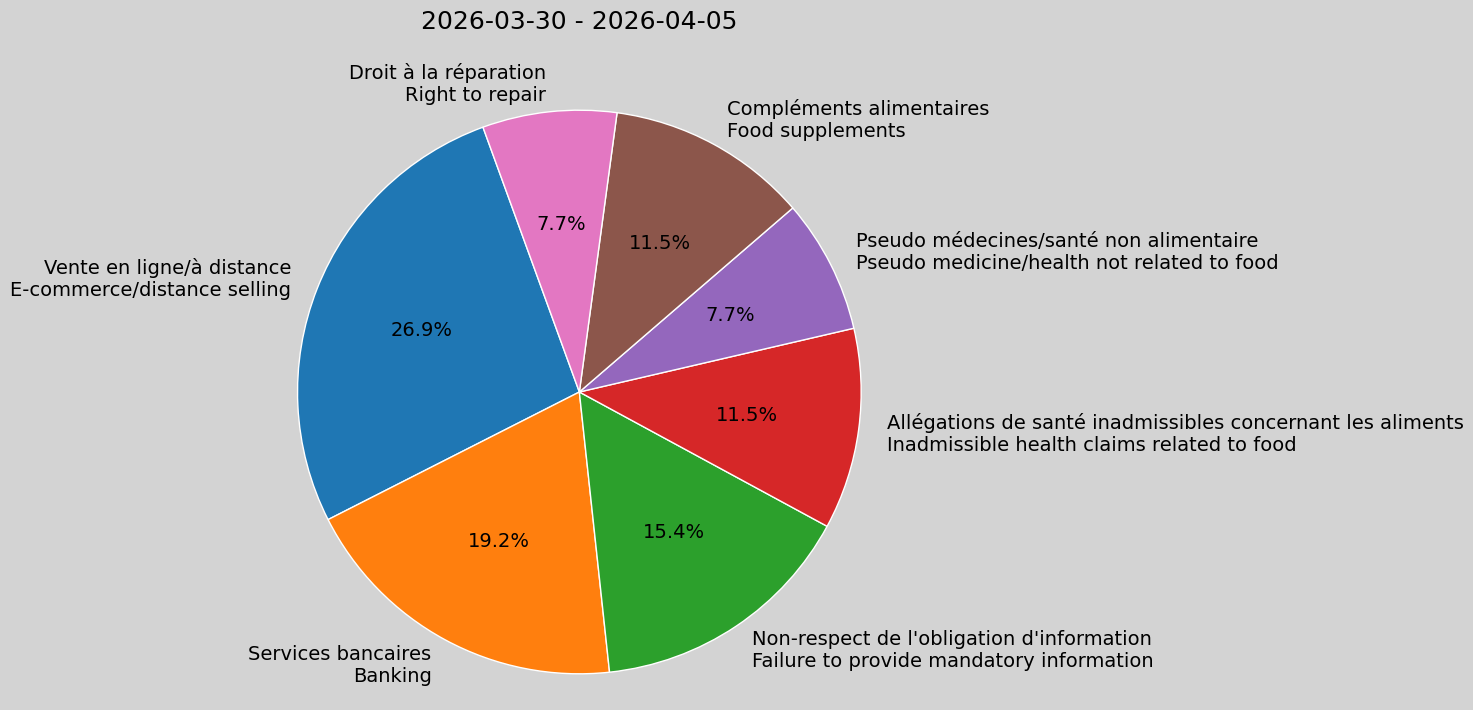
Au cours de la semaine du 30 mars au 5 avril 2026, le Service Juridique a mené un total de 21 consultations portant sur diverses questions relatives à la protection des consommateurs. Ces consultations ont été menées par le biais de multiples canaux de communication, principalement par l'intermédiaire de e-mail et téléphone, avec une utilisation occasionnelle de appels vidéo, messageret télégramme.
Dans sept cas, les consultations ont porté sur des questions liées à commerce électronique/vente à distance. Les consommateurs ont souvent posé des questions sur leurs droits concernant les politiques de retour et les retards de livraison. Dans ces cas, des conseils ont été donnés sur la manière de faire valoir efficacement leurs droits et de chercher une solution avec les vendeurs.
Le thème de la banque a fait l'objet de cinq consultations. Les consommateurs se sont surtout inquiétés du manque de clarté des conditions générales et des frais non autorisés. Les conseils proposés consistaient à examiner les conditions avec les banques respectives et à identifier les obligations contractuelles ou les violations des droits des consommateurs.
Un autre sujet de préoccupation était manquement à l'obligation de fournir des informations obligatoires, Le manque d'information a été constaté dans quatre cas. Il s'agissait souvent de problèmes d'étiquetage des produits et d'informations insuffisantes sur les conditions des services. Il a été conseillé aux consommateurs de contacter les fournisseurs de services pour demander les informations nécessaires et comprendre leurs possibilités de recours si la conformité reste insuffisante.
Il y a également eu trois consultations concernant les allégations de santé (irrecevables) relatives aux denrées alimentaires. Les consommateurs ont cherché à savoir comment interpréter les déclarations trompeuses sur les prestations de santé. Ils ont été informés des réglementations en vigueur pour empêcher les allégations trompeuses et ont été encouragés à examiner de près les informations sur les produits.
À deux reprises, le thème de la pseudo-médecine/santé non liée à l'alimentation a été évoquée. Les demandes concernaient des traitements médicaux non fondés sur des preuves. Les consommateurs ont reçu des informations sur l'identification des sources crédibles et sur la manière d'éviter les pratiques frauduleuses dans le secteur de la santé.
Compléments alimentaires est apparu comme une préoccupation dans trois discussions, les consommateurs s'interrogeant sur la qualité et la composition. Nous avons expliqué l'importance de vérifier les approbations réglementaires et conseillé des mesures pratiques pour vérifier l'authenticité et la sécurité des produits.
Le sujet le moins abordé a été la droit de réparation, qui a fait l'objet de deux consultations. Les consommateurs ont été informés de leurs droits en matière de réparabilité des appareils électroniques et électroménagers et ont été encouragés à demander des services de réparation conformément à leurs droits dans le cadre des directives européennes.
Dans un rare cas, le conseil a été jugé hors de notre champ d'action, car la question concernait la fiscalité transfrontalière, ce qui n'est pas de notre ressort en tant qu'organisme de surveillance des consommateurs. Il a été conseillé de s'adresser à des services de conseil fiscal appropriés.
Cette semaine, le conseil a été fourni par WhizzBang.